With Harmonica in Hand, Grateful Patient “Plays” it Forward

Charlie Hess Creates Education Fund for Pulmonary Residents and Fellows

Charlie Hess doesn’t take requests!

He chuckles as he pulls a small gleaming silver object out of his pocket and admits, “I don’t really know how to play the harmonica, but you don’t really have to know how to play the harmonica to play the harmonica.”

He puffs out a few pleasant notes, then explains that the instrument is his “smile machine” because when he plays it for the nurses, the infusion staff, and his fellow cancer patients, it makes them smile.

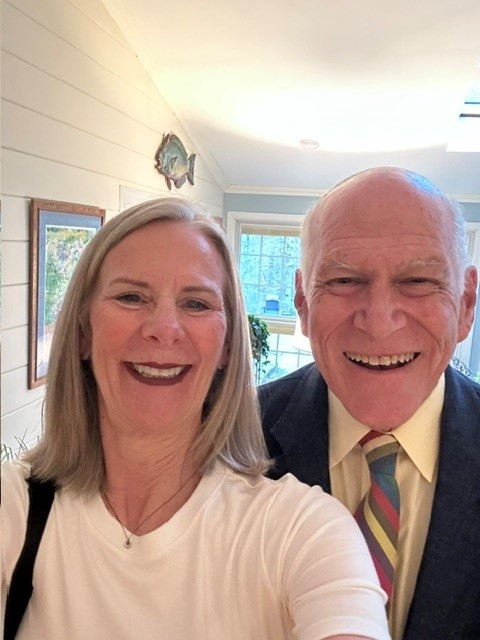
This image shows Charlie Hess (right) with his wife Jan.

In 2024, Hess was diagnosed with colorectal cancer that had metastasized to his lung. Because the tumor was so large that it was impeding his breathing, he sought the medical advice of Gregory C. Kane, MD, ’87, FEL ’93, the Jane & Leonard Korman Professor and Chair of Medicine.

When Hess and his partner, Jan Valentic, attended their first appointment with Kane, they were expecting a quick visit that was strictly clinical and impersonal, considering the primary cancer was not lung cancer. What they got surprised them.

“He spent a full hour with us. He brought up images of my CT scan, which no other doctor had done. He explained all of the imaging, using metaphors we could understand to better explain what was going on, and what his perspective was on it. And so, the medical part was excellent, but really the reason that he stood out was the feeling of being seen and heard and cared for,” Hess says. “His treatment and his caring of me was extraordinary. There was a clear recognition that when you were in the room with him, you were the only thing that mattered.”

Because of that outstanding care provided with compassion, Hess and Valentic established the Dr. Gregory C. Kane Pulmonary and Critical Care Education Fund to support Kane’s work training the next generation of pulmonary specialists.

To describe Kane, Hess thumbs through journalist Bill Moyer’s book, “Healing and the Mind” and stops to quote a passage from a physician interviewed by the author:

“… I know who the great doctor is, and the also-ran. And the difference between the great doctor and the also-ran is not how much he or she knows, but what he or she brings to the patient as a human being... I see the people who rise above the others, who serve as mentors. They have something extra.”

“Dr. Kane is a great example of that,” Hess says, noting that he and his partner created the new education fund because, “It’s important to pass on his skill and training and his way of treating patients to doctors coming up because other patients besides ‘Charlie’ need to get treated that way.”
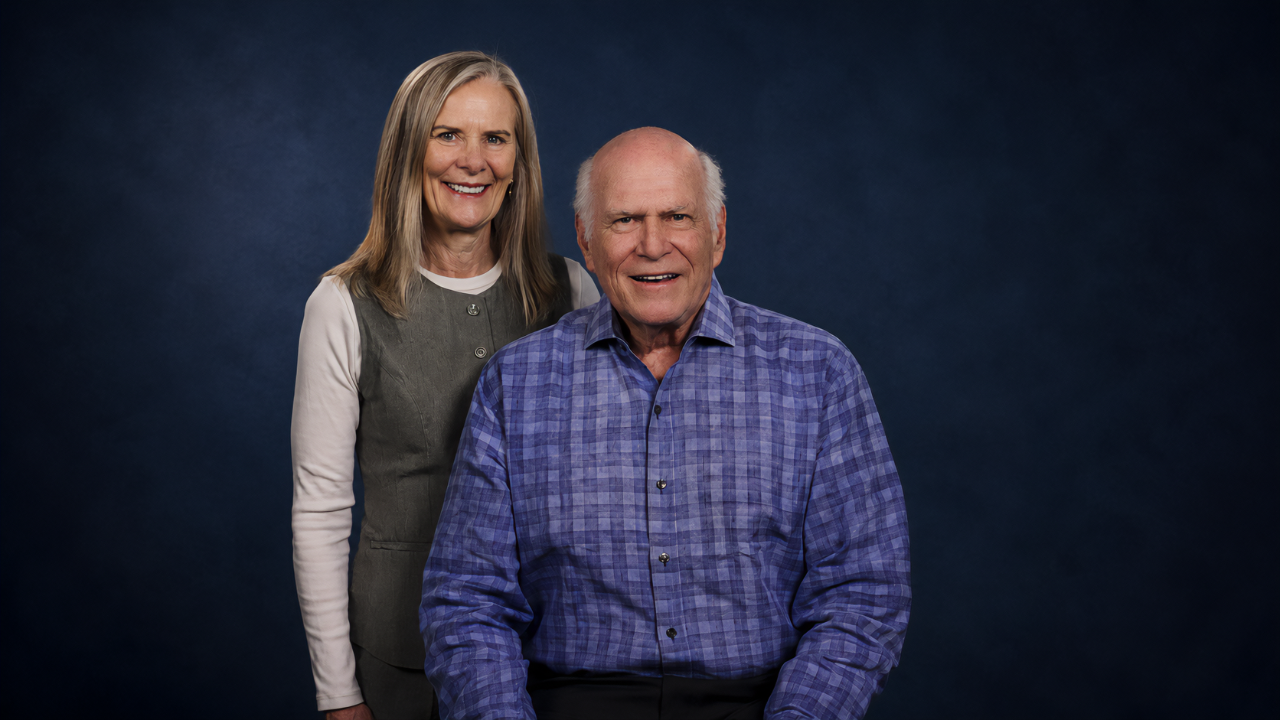
This image shows Charlie Hess (right) with his wife Jan.

Hess, a businessman from Princeton, New Jersey, received treatment that included a combination chemotherapy regimen. The therapy shrunk his tumor about 90 percent in a little under a year—a response that even surprised Kane.

“I have learned that medical care is a combination of excellent expertise from the doctors and a positive attitude from the patients. Dr. Kane gave me both,” he says. “It’s not only in the health journey, but also just in life… inspiring and uplifting others is really important physically and certainly mentally.”

Hess says his goal is to spread joy wherever he can—and his harmonica plays a big part in that.

“You play it anywhere, and even with the most curmudgeonly audience if you play it long enough, they have to smile,” he says, noting that he ascribes to Dolly Parton’s tenet that “if you see somebody without a smile, give them one of yours.”

To that end, he gives out harmonicas, including to the infusion center nurses who play with him upon his arrival. They call their ragtag band “Charlie’s Angels.”

“Someone once said: ‘It’s not the years in your life that count, it’s the life in your years.’ And so, I’m trying—and have been trying for some time—to make as many important impacts as I can,” says Hess, who supports several philanthropic endeavors. “Dr. Kane’s ability to mentor the next generation is really powerful. I hope the fund will go beyond the next generation… and the next generation…”