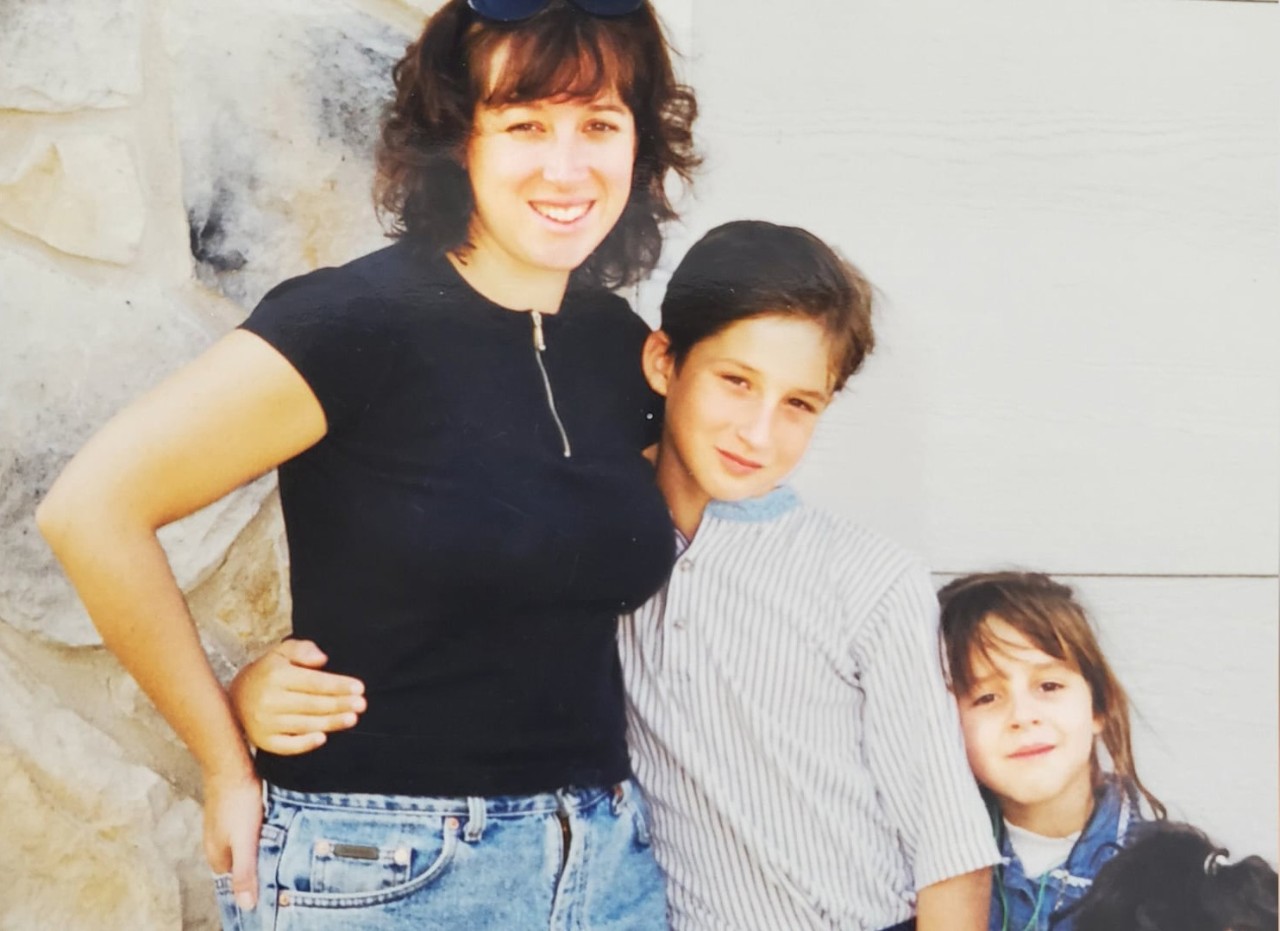
“I realized I couldn’t leave him,” she says. And at the same time, she thought of the baby she was carrying. “I took myself to the hospital and went to the front desk and said, ‘Please save my baby!’”
She spent a month in Princeton House Behavioral Health in Princeton, New Jersey, and underwent six rounds of shock treatment to alleviate the depression.
“That’s truly when the recovery from my depression began,” she says.
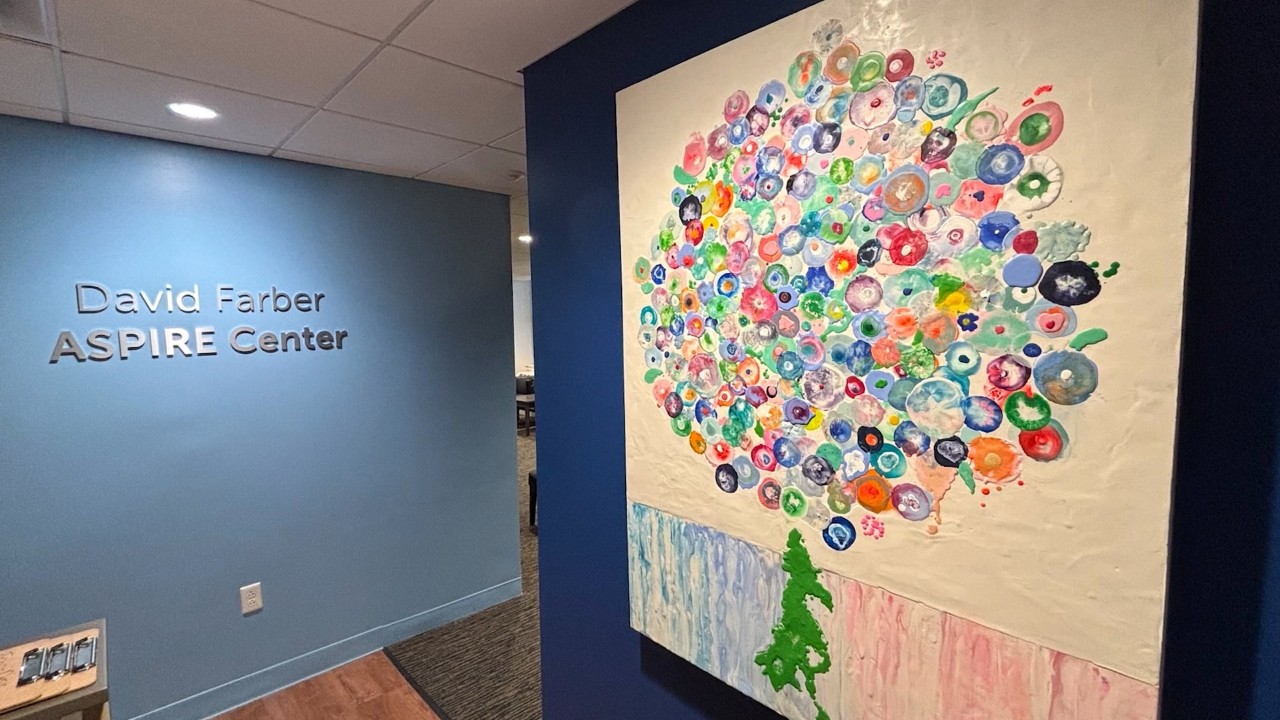
The daughter with whom she was pregnant grew up to be Katie Van Fossen, PhD, now a therapist, researcher, and assistant professor at the David Farber ASPIRE Center.
Van Fossen says she learned about her mother’s depression and suicide attempts in small, developmentally appropriate chunks as she grew up. What stuck with her most was that her mother had a mental health crisis and doctors and therapists helped her get better.
“It was really meaningful and influential in my life—that these people could come together to keep someone safe,” Van Fossen says. “So, I wanted to learn how to better support parents and their children. That led to my research with community-based suicide prevention work.”
Inspired by her mother’s journey and her own desire to help others, she joined the David Farber ASPIRE Center when it opened. Trained as a medical family therapist, she has experience working with families in primary, specialty care, and school-based settings.
“Back when my mother had her first mental health crisis, it was pretty stigmatized, pretty isolated to the individual. There wasn’t a lot of care for the family, or the desire to really discuss it in the community,” Van Fossen says. Now, she adds, there is a bigger awareness around mental health and suicidal crises, and more of a family-based model of care.
Holloway agrees.
“When I first attempted suicide, the reaction (from family) was very fearful and very concerned about the perception that other people would have if they learned I had tried to kill myself,” she says. “I think now there is a better understanding that suicide is a symptom of an illness that needs to be addressed, and that there are a lot of ways to get help now that weren’t available when I was fifteen. There is the understanding that the whole family—not just the patient—needs to be supported. They (therapists at the David Farber ASPIRE Center) help to educate the family on what depression is, how they can be affected by it… and what they can do to help themselves and their loved ones during such an illness.”
Van Fossen says it is the three-prong approach to helping the patient and family that makes the David Farber ASPIRE Center unique.
The first prong is state-of-the art clinical care focused on evidence-based methodologies and the concept of treating the entire family, not just the patient. The second prong is an education wing that works to provide specialized training for those not in psychiatry or therapy-based specialties, such as family physicians, clergy members, etc. The third prong is its research wing.
Some of the research currently being conducted by the ASPIRE Center includes the effectiveness of the 988 suicide prevention hotline in Pennsylvania; diverting young people from a hospital setting and into a home setting for specialized treatment; and establishing a mobile crisis diversion unit, which sends trained mental health professionals with law enforcement when a 911 call is placed for a mental health crisis, just to name a few.